



Fairfield University is often described as a politically apathetic campus. In recent coverage of the 2024 presidential election, some students expressed that they stay away from politics due to the stress it causes them. Several other students who were reached out to for comment explained their hesitancy to speak out for fear of judgment. A lack of interest in national politics on campus is nothing new, either. A 2007 article featured in The Mirror argued that political apathy is abundant at Fairfield.
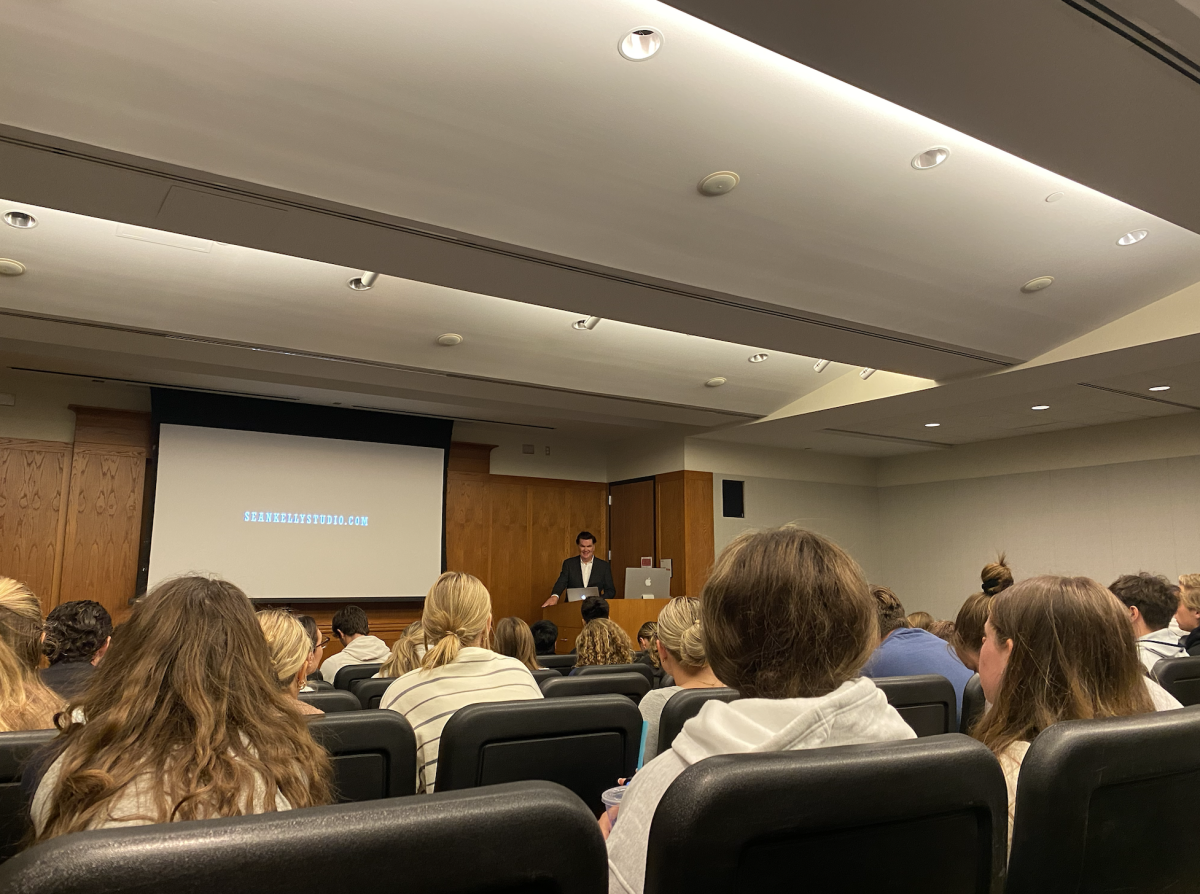
A recent on-campus event centered around politics was met with a large number of attendees, although many students were there as part of a class obligation. Unlike the library’s debate watch party last month, last week’s presentation by political cartoonist and illustrator Sean Kelly was highly attended.
With the 2024 presidential election just over one month away, Fairfield University is hosting an array of events focused on politics. Last Wednesday’s event, titled “Serious Elections, Funny Pictures: How Humorous Images Have Influenced Political History,” was hosted by the Fairfield University Art Museum.
Students, faculty and others filled the seats of the DiMenna Nyselius Library auditorium for the lecture, which began at 12:00 p.m. and lasted for just over an hour. Attendees included students from Philip Eliasoph’s class on propaganda and Prof. Karla Barguiarena’s Broadcast Communications course.
Kelly was met with engagement from students during his presentation on the history of political cartooning, perhaps a sign of increased interest in politics from students—or at least those enrolled in related courses.
While weaving in references to current politics throughout his humorous slideshow, Kelly also touched on the changing landscape of cartoons.
“Video, I think, is the new editorial cartoon,” Kelly said while showing the audience several clips of political parodies from Saturday Night Live, which started its 50th season last Saturday.
Long before SNL and TikTok, editorial cartoons in newspapers were platforms for political satire. Kelly walked viewers through some of The United State’s most notorious political cartoons, from the origins of the donkey and elephant to Uncle Sam.
Kelly’s presentation garnered lots of laughs from the audience, which may come as no surprise considering his resumé. Published in 2017, Kelly illustrated comedian Stephen Colbert’s book “Midnight Confessions.” However, the cartoonist made sure to note the seriousness of some political illustrations, including Bill Mauldin’s cartoon depicting the Lincoln Memorial crying after the assassination of John F. Kennedy.
The slideshow presented by Kelly also made reference to the recent layoffs of some political cartoonists. Kelly explained the weakening of editorial boards due to backlash and threats, including the attack on employees at the French magazine Charlie Hebdo.
“In France, in January of 2015 a number of cartoonists were shot dead by terrorists,” Kelly said. “It was a real tragic thing for France, for the world and for the world of cartooning.”
At the conclusion of his lecture, Kelly took a couple of questions from the audience—yet few students raised their hands. Looking forward, Kelly warned of the potential threat of AI and the dangers of misinformation, defining the latter as “both false and harmful.” While the future of political cartoons may be unclear, there’s at least a semblance of an audience for them at Fairfield, evident by the seats taken at Kelly’s event.It remains to be seen how upcoming events, including the Quick Center’s Open VISIONS Forum featuring political commentators Alyssa Farah Griffin and Molly Jong-Fast, will be received by the student body. As the election inches closer, time will tell whether Stags will become more politically involved.