




There are so many things I love about being Puerto Rican. The food, the music, the scenery; like every other culture, you can’t quite replicate it. I’ll die with a burning love for my island in my soul, and I’m so privileged to live in this country and to express it openly, without fear of consequence. In current times, this is an exception.
In a country where humans are being kidnapped and stripped of their civil rights because of the color of their skin or the sound of their voice, Puerto Ricans are the loophole. We did not cross any borders; we were added to the map. You can claim we are illegitimate, but we were born as Americans. I exercise my First Amendment rights by standing up for my Latino brothers and sisters, who can’t speak up without fear of losing everything their families have worked so hard for.
On Jan. 5 of last year, Benito, otherwise known as Bad Bunny, sent a love letter to his island and his people in his sixth solo studio album, “Debí Tirar Más Fotos”, also known as “DTMF”, represented by a photo of two plastic chairs in front of a backdrop of banana trees. The album opens with “Nuevayol”, a modern take on Andy Montañez and El Gran Combo de Puerto Rico’s “Un Verano en Nueva York”, representing the historical importance of Nuyoricans.

Image of “DTMF” courtesy of Spotify
My family’s story, like many others from La Isla del Encanto, starts with my relatives taking a chance on the American Dream and moving to New York City, giving up the sounds of coquis singing at night in exchange for cars honking on the streets. These “Nuyoricans” had a pivotal role in defining the identity of New York City, alongside African Americans and other people of color who found a home in the capital of the world, but not without shared hardships.
Those hardships that so many people of color face when living in America are what make watching our people succeed so powerful. For Puerto Ricans, watching Benito Antonio Martinez Ocasio lift his three Grammys on Sunday night was evidence of that.
All of the songs on the album are proof of Bad Bunny’s versatility, from the high-energy “Voy A Llevarte Pa PR” to the angsty “Bokete.” Behind the musical genius of this album lies the message of Benito’s love for Puerto Rico.
“Debí Tirar Más Fotos”, translating to “I should have taken more photos”, tells the story of watching something you love change, and wishing you had taken advantage of the time you had in the past to truly enjoy its presence. This sentiment can be applied to many parts of the Puerto Rican experience, from the frustration of watching our beaches become illegally privatized and developed, to the pain of watching our grandparents age slowly through our smartphones on Facebook Messenger’s video chat.
The album’s eleventh track, “Turista,” is an analogy of heartbreak and the detrimental impacts of tourism on the island. The opening lyrics, “Tú solo viste lo mejor de mí y no lo que yo sufría” (“You only saw the best of me and not how I suffered”), can be applied to the 7 million annual visitors to the island who see our beautiful beaches and enjoy our flavorful cuisine, but miss the importance of protecting the culture they are enjoying.
If I’m being honest, my parents weren’t the biggest fans of Benito, not until they heard him sound the alarms that they’ve been warning about for as long as I can remember. What’s happening to Puerto Rico is not new.
In the album’s most political song, “Lo Que Le Pasó a Hawaii,” Bad Bunny connects the dots between the annexation and commercialization of Hawaii’s islands to the invasion of Puerto Rico and the privatization of its land due to baffling tax incentives for outside investors to develop protected areas. This gentrification, spurred on by the weakness of Puerto Rico after Hurricane Maria in 2017, has changed the island forever. “Quieren quitarme el río y también la playa,” (“They want to take my river and my beach,“) he sings. Not only is there the literal heartbreak of losing the landscape of our people, but there are the financial consequences of rich Americans moving to the island that are pushing Puerto Ricans out of their homeland.
The Puerto Rican rapper choosing to express his love for the island at the peak of his tremendous career shows how passionate we are about our heritage. After building up a platform on the backs of his people, he has turned the attention to the place that made him who he is today, using his influence to echo messages of disapproval for the current administration’s hostility towards Latinos.
While accepting the award for Best Musica Urbana Album for “DTMF”, Benito made his message clear: “Before I say thanks to God, I’m going to say, ICE out,” he said. “We’re not savage, we’re not animals, we’re not aliens. We are humans, and we are Americans.”
His message was met with standing ovations from the crowd. When “DTMF” was announced as Album of the Year, he broke down in tears at his seat as the crowd continued to express their support.
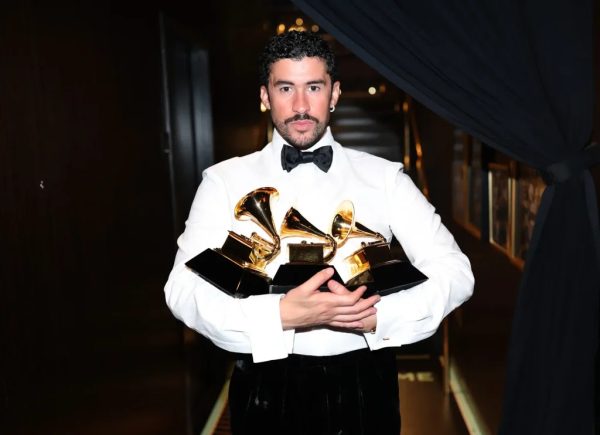
Image courtesy of Matt Winkelmeyer/Getty Images for The Recording Academy
That specific win, that album being the first-ever Spanish album to win, invoked a sense of pride for Puerto Ricans that I’ve never seen before. Watching Benito lift the golden gramophone and dedicate it to “all the people who had to leave their homeland, their country to follow their dreams” made all the heartbreak worth it to see one of our own claim such a big prize – for a confession of love to our homeland.
My Sunday night ended with my friends and family expressing how much this win and this album mean to us. Instagram Stories poured into my feed of our island, of families enjoying the shade of palm trees and waving our flag with nothing but love.
I joined in on the celebration, posting a picture from 2014 of me sitting in one of those plain white plastic chairs on my abuela’s balcony next to my dad. Those white chairs may seem insignificant to some, but to Puerto Ricans, they represent family gatherings and memories of late nights spent in those chairs singing, laughing and playing dominoes; those white chairs represent love.
Bad Bunny said it best while accepting his second Grammy of the night, “The only thing that is more powerful than hate is love.”

Image contributed by Crystal Arbelo