














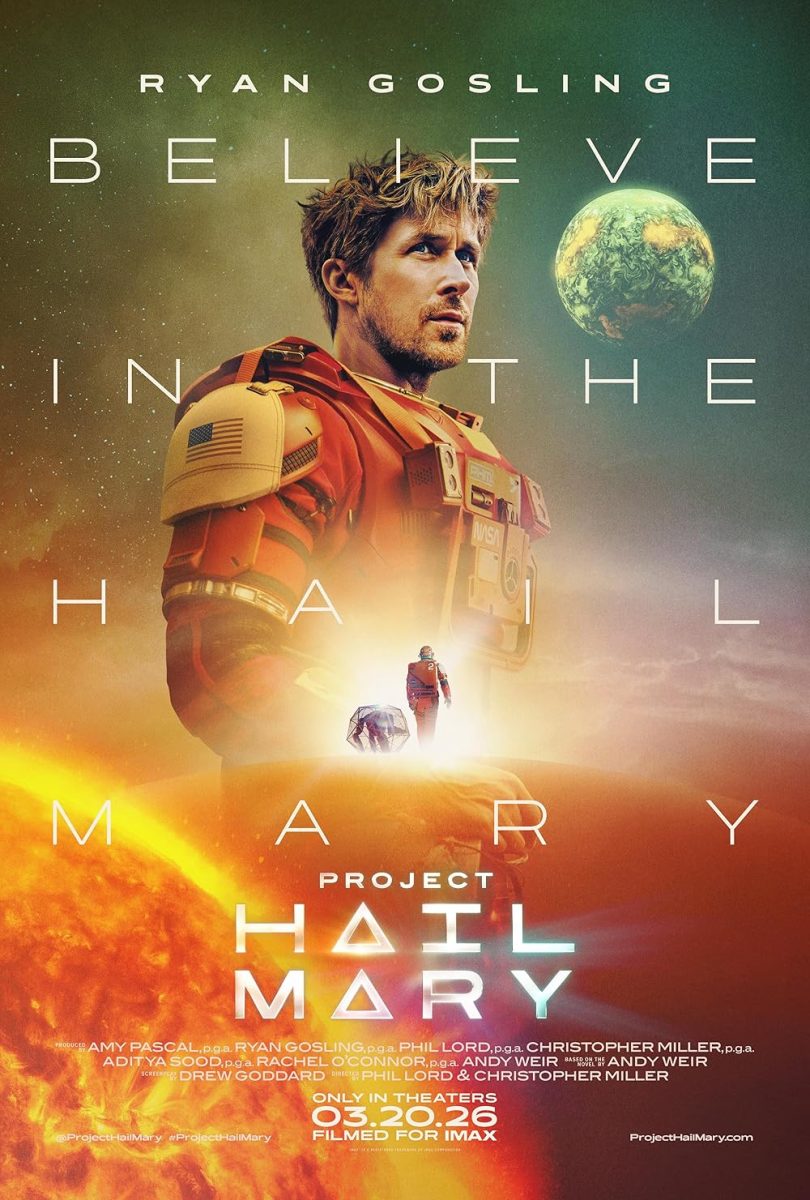
In case this is news to you, Ryan Gosling’s latest science-fiction blockbuster “Project Hail Mary” (2026) is a huge hit. Directors Phil Lord and Chris Miller crafted an emotionally resonant picture, giving audiences an engaging experience that breezes along through a complicated, yet simultaneously simple story.
Based on a novel by Andy Weir (author of “The Martian,” which was also successfully adapted into a film starring Matt Damon), the stars are dying, including our sun, and humanity sends Dr. Ryland Grace (Gosling) on a long-shot expedition into the cosmos in hopes of finding a solution.
Hope, truly, is the word to remember, as this film not only offers a revived box-office reception rarely seen post-COVID, but also a studio production at its highest premium of quality and a refreshingly wholesome tale of friendship.
I’ve held off on writing my review for this film because there are so many ways I could take it. On the one hand, Lord and Miller are a directing duo I’ve followed since childhood with “The LEGO Movie” (2014) and “Cloudy with a Chance of Meatballs” (2009). They continually deliver entertaining and well-crafted movies that impress with their wit as much as their skilled visual storytelling, often appealing to wide audiences of all ages.
Or I could mention the spectacular score by Daniel Pemberton (Lord and Miller’s “Spider-Verse” films, A24’s “The Drama”), which weaves emotion and suspense expertly with moments of levity and stunning cinematography by Greig Fraser (“Rogue One,” “Dune,” “The Batman”). The behind-the-scenes work on this movie puts practical effects and digital artistry into a potent combination, as immersive as it is beautifully realized.
But on the other hand, I think the real reason people have clicked so much with “PHM,” and the reason I haven’t stopped thinking about it, is how optimistic and relevant the film feels. In other words, Gosling’s alien pal Rocky is everything. By giving viewers characters who are friendly, kind, intelligent and relatable, Lord & Miller hold an endearing mirror up to our current culture.
People, seeking connection in a time where the world feels like it’s ending, are widely feeling lonely and hopeless. The tense modern global climate, paired with rising corporate monetization, makes us feel further isolated to our devices.
Which is why “PHM” is so timely – Gosling represents the everyman of today, an anxious, niche-obsessed introvert who feels underequipped and lost in their current inescapable circumstances. The solution to his problems, an unexpected friendship with a like-minded foreigner, fulfills the desires of moviegoers because we can trust it.
Much like the Earth today, Grace and Rocky are faced with impossible odds and unimaginable stakes. Their ability to rely on each other, completely committed to working together, protecting not only their respective planets but one another, is inspiring.
More movies should follow “PHM” in speaking directly to modern audiences, without malice or condescension, decidedly hopeful, about how we collectively strive to protect who we love. And with this spring’s Artemis II success at NASA, there is no better time for a movie like this.