














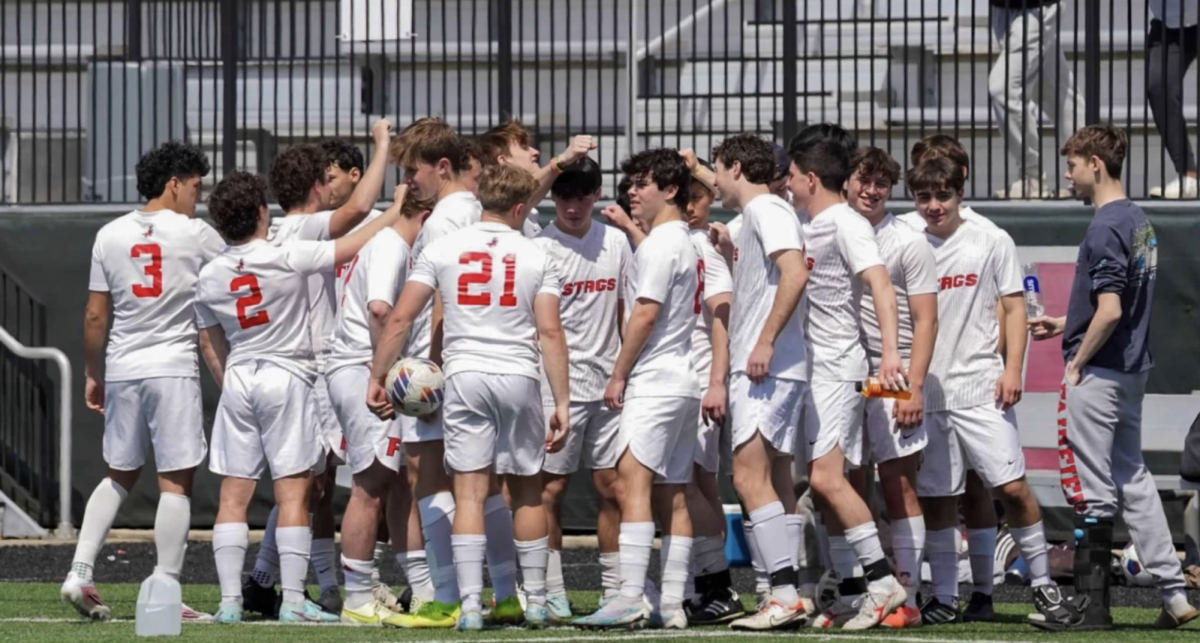

Picture this: Fairfield is in the middle of a fierce match against a MAAC rival. Running across the playing field as the clock ticks down on the game’s 23rd round, the last Stag standing has one chance to even-out the score to 12-12 and send things into overtime. His teammates are yelling out how the other team is set up and how to get around them, but their voices do nothing as he relies on his instincts to get out of the situation. With just seconds on the clock, the final player is cornered by three defenders but manages to somehow evade elimination as the timer goes off and the Stags live to see another round. The whole team explodes, and the crowd goes wild.
Fairfield University is home to 25 club sports teams, with a variety of competitive outlets to choose from. When asked to name some sports that Fairfield offers on a club level, students stick to naming sports such as baseball, soccer or volleyball, sports that the average fan would watch to quench their thirst for a good battle between athletes. Take a second look at the scenario mentioned above, would you watch that game? It sounds like a sports fan’s dream, a comeback story against a rival to send things into OT.
Now what if the sport they were playing didn’t look like other sports? What if the running mentioned earlier required just the click of the ‘W’ on a keyboard and some nudges of a mouse? What if the game was entirely virtual?
Suddenly, a majority of the excitement to watch a good battle doesn’t apply. Audiences are turned off.
For the Fairfield University Esports team, the struggle to be taken seriously is a familiar battle. Consisting of 46 members spread across six different games, the triumphs and talent of the esports team often go unnoticed and brushed off as just a video game.
When asked about the unique categorization of esports, first-year Sion Yap explained it as “a really strange balance, because traditionally you wouldn’t really associate playing video games with the typical athleticism you see in more physical sports—basketball, football, baseball, etc.”
Yap serves as both a substitute player for the VALORANT A-team and the captain of the League of Legends (LoL) team. He also has experience playing basketball, soccer, and baseball. While esports is more sedentary than traditional sports, Yap still applies many of the same skills during online competitions.
“Having good reflexes and situational awareness from playing those sports certainly helped when I started getting into these games,” Yap notes. “The team aspect is even more important, especially because a good chunk of players in the scene tend to lack social skills, respect for their teammates—believing they are the only ones who know what they’re doing—and a growth mindset.”
Tackling the negative stigmas surrounding video game culture is a constant topic of discussion in the world of esports. First-year Axel-Josh Gonzalo credits these negative stigmas for the lack of support the esports team gets. “For the most part, I am not taken seriously whenever I do mention I’m on the team,” Gonzalo states.
Nonetheless, Gonzalo understands the hesitation in labeling esports as an athletics program. “To label esports as an athletics program would be a disgrace to actual athletics programs, which demand physical performance from all their members,” Gonzalo shares.
Compared to other Fairfield club teams and their practices, Gonzalo doesn’t believe esports measures up. “The most activity a player gets during practice is moving their mouse around on a table, which cannot compare to other, more mainstream sports,” he adds.
“We compete in the MAAC just like all the other athletes at Fairfield do, but under the Esports division. I’m not really sure whether I’d even classify what I do as an athletics program,” Yap explains. “Especially when our “training” is spending time on a computer.”
Yap continues to grapple with how to define the esports team. “At the same time, calling it a club doesn’t quite fit either, because these teams are here to compete at the highest level possible,” he explains.
This season, the VALORANT and League of Legends teams have the opportunity to compete in Riot Games’ official nationwide collegiate league.
“It’s certainly not casual,” Yap adds. “But considering it an athletic program just because of its competitive nature also doesn’t seem to fit.”
No matter what defines the Esports team, there is no question that the players put in the necessary work to constantly refine the skills necessary to compete at such a high level. The preparation leading up to an actual match equates to the routine of any competitive program.
As a captain of the LoL team, Yap holds the responsibility of scouting opponents and coordinating match information. This scouting is followed by the whole team reviewing film and seeking out any weaknesses in their opponents that they might be able to exploit.
Gonzalo explains how this process looks for VALORANT, “We check their in-game ranks, the characters they play, and their best and worst maps, in order to gain as much information about our opponents as we can.”
For some matches, the PCs in the RecPlex lobby are occupied by members of the esports team. Yap usually plays in the RecPlex, but cites some environmental factors as possible distractions when in an important game, “It’s very distracting and can lead to sometimes losing rounds. If there is music playing over the gym speakers, sound can leak through our headphones and add another factor to break our focus.”
Gonzalo utilizes his personal PC setup and avoids playing in the RecPlex. “I played on the PCs there twice, once when I tried out for the team, and again for my first game of the season. I did get some looks from people in passing and I was slightly embarrassed to be seen playing video games there,” Gonzalo admits.
While those factors detract from the experience, Yap appreciates how useful the PCs are for individuals who don’t have their own setup on campus, “All one needs to play, even while not on a team, is a keyboard, mouse, and (optionally) a pair of headphones are available.”
“It’s also great that others can see what we do and how easy it is to get involved,” Yap reflects.
Getting involved in esports looks different for every player, but some general themes stand out.
Sebastian Lis, a junior on the Rocket League and Omega Strikers teams, joined for the love of the games and the idea of competing with an end goal.
“I have always been on the more competitive end of games and I have enjoyed being at a high level. The level of collegiate games have been roughly around where my skill was in the game, but this was just an added bonus.”
For Gonzalo, “I figured that joining the team and using my skill would be a good way to use my free time while having fun playing a game I enjoy.”
Yap sought out a community of gamers: “I didn’t really care much about competing as much as I did just finding others with similar interests.”
Improving alongside his peers is also important to Yap.
“I wouldn’t even consider myself a great player for either game relative to my teammates, but I enjoy working with a team and befriending others who also enjoy playing these games competitively like I do, or more passionately.”
Altogether, there may never be a category that is perfect for a team as unique as esports, but that’s part of the charm for some players and fans. They still act as a competitive team in more ways than one and are pushing the boundaries of the ever-evolving world of sports. As Yap says, “It’s got its own unique thing going on.”