







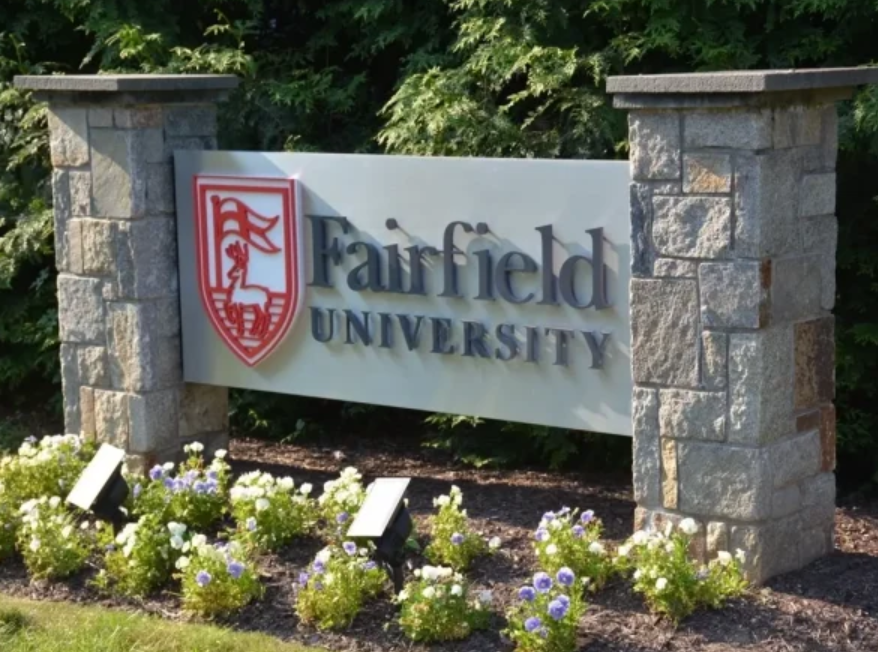
In a campus environment that has avoided political engagement, a new student organization is seeking to create space for dialogue, community and civic involvement.
The Fairfield University College Democrats held their first meeting last Wednesday, marking the official launch of the club. The organization’s leaders say the group was formed in response to growing political disengagement among students and a lack of spaces on campus for open discussion.
The club’s president, junior Micheala Alsiadi, said the idea to start College Democrats developed gradually over her time at Fairfield. She described encountering many students who felt disheartened by the political climate and frustrated by what they perceived as limited opportunities to discuss those concerns openly.
That feeling intensified after the creation of the Turning Point USA chapter on campus this September, the president said, as some students felt one political perspective had become highly visible while others felt unrepresented.
“I’ve met many students who feel politically invisible,” said Alsiadi. “They felt that a loud, highly visible group dominated the conversation, leaving others without representation. I felt that way too.”
A shift came about from an unexpected conversation in a residence hall lounge. Alsiadi said she overheard a student discussing politics on the phone and later approached him to ask whether he felt politically represented on campus. Although the student identified as conservative, he said Turning Point USA did not reflect his values.
“That moment made me realize that political invisibility was not limited to one ideology,” Alsiadi said. “It opened my eyes to how deeply disengaged this campus has become.”
The realization was particularly troubling given the historic role college campuses have played in social movements. Alsiadi pointed to events such as the protests in the past at Kent State and the Free Speech Movement at UC Berkeley, as well as ongoing political engagement at other Catholic institutions, such as DePaul, as examples of student-led activism.
“Historically, college campuses have been the drivers of social change,” said Alsiadi. “So then, why not Fairfield?”
The executive board of College Democrats emphasized that the club’s mission is not to push ideology, but to support students through education, dialogue and community-building. In practice, they said, that means creating a space where students can discuss political issues respectfully, even when disagreements arise.
“We recognize how polarized politics have become,” the executive board said. “While we are firm in our values, we also deeply value engagement with people who hold different perspectives.”
Open dialogue, they said, is central to the organization’s work, with an emphasis on good-faith discussion and recognizing the lived experiences behind political beliefs. The group plans to welcome all students, attend meetings, ask questions, and participate in conversations.
“Our goal is not to exclude, but to encourage civic engagement in all its forms,” the executive board said, adding that meaningful participation in democracy extends beyond party affiliation.
While the organization is open to students of all viewpoints, the executive board acknowledged that its primary purpose is to build community among students who identify as Democrats or more broadly as liberal or progressive.
“We’re realistic about the fact that we don’t expect students who identify as Republican or conservative to become regular members,” the executive board said. “And that’s okay.”
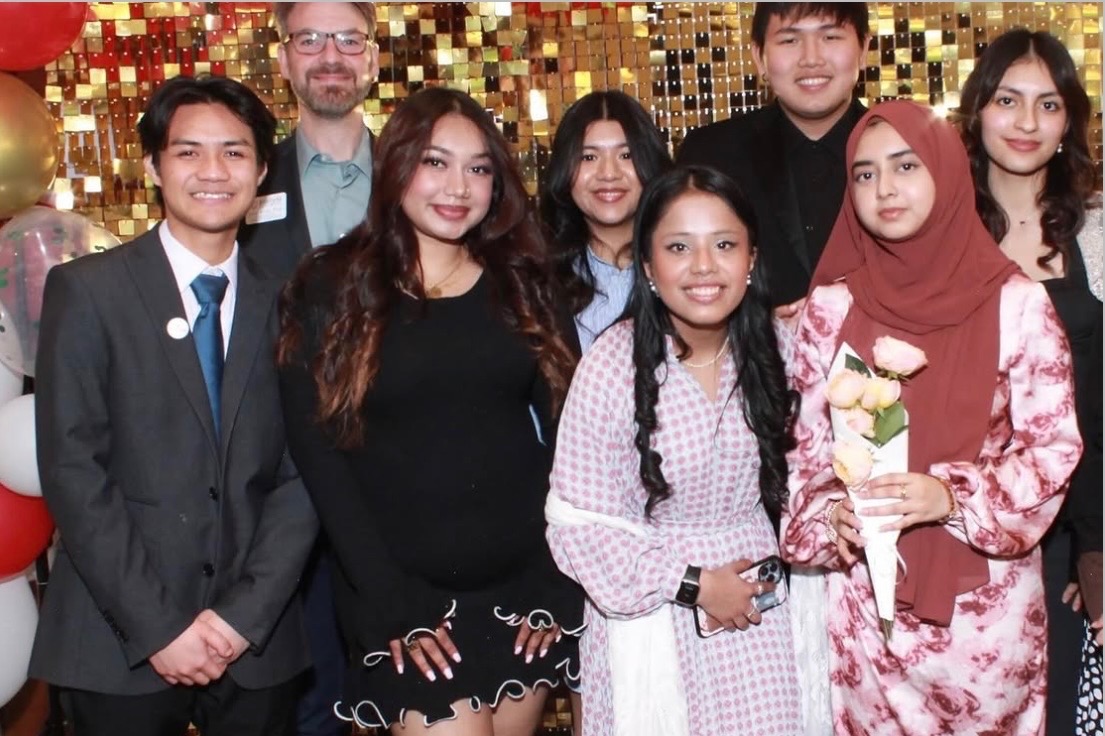
The group’s first meeting drew a larger response of 15 people, more than the president initially expected. Invitations were shared only through word of mouth, and Alsiadi said they anticipated a small turnout.
“The idea of getting more than 10 people in that room was a reach,” the president said. “I’m grateful for the good friends and allies we have who were able to make it.”
As the club emerges, its leaders anticipate challenges, including student apathy and opposition. The executive board said many students underestimate how political decisions affect their future, from the job market to housing affordability. They also expect criticism as the organization becomes more visible, particularly online. In response, the president encouraged critics to engage directly rather than anonymously.
“Talking anonymously online is not the same as engaging in real life,” said Alsiadi. “If you disagree with us, we welcome you to question us openly and in person.”
In the short term, the executive board said the club is focused on building a committed base and establishing a strong foundation for the future. Long-term goals include organizing voter drives, hosting guest speakers, and participating in protests.
Ultimately, the group hopes to become a lasting presence on campus.
“Success looks like building an organization that can outlast our current executive board,” the executive board said, “and continue empowering students to engage meaningfully in civic life long after we’ve moved on.”
