
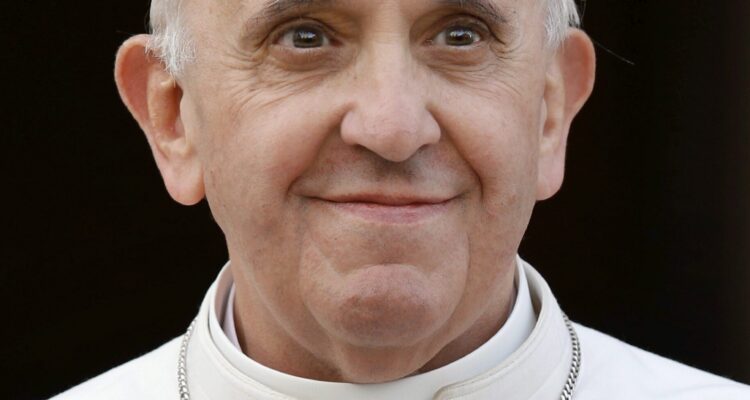
On Feb. 14, the Vatican reported that Pope Francis was admitted to Rome’s Gemelli Hospital due to a concerning and worsening respiratory emergency. Though seemingly sudden and unexpected, the symptoms responsible for the Pope’s hospitalization were just the most recent in an ongoing case of bronchitis the Roman pontiff has been fighting since the beginning of the month.
Though recent reports from Rome have been trending in a positive direction, the events have sent a shockwave through the broader spiritual community, leading many to reflect on the Holy Father’s legacy over the last ten years. While there is much to be said about the impact of Pope Francis in a broader institutional context, it is his impact on Jesuit education and a new era of inclusivity that has been the cause of a massive foundational shift at Fairfield University.
I spoke with Rev. John Savard, director of Campus Ministry at Fairfield University, who had much to say about the role the Pope has played in Jesuit education and the perspective of the church over the last decade. “You know, we often can think about who’s in and who’s out,” Fr. Savard noted, “But he [Francis] said, you know, before we think about that, let’s just—if people are hurting—let’s grab them. Let’s bring sustenance. Let’s bring healing.” It is this unwavering commitment to inclusivity or rather “meeting people where they’re at,” Savard explains, that is central to understanding the 266th Pope’s legacy.
Looking inward, the impact of Pope Francis on the evolving culture of inclusion at Fairfield cannot go unacknowledged. Within Campus Ministry, Savard pointed to a number of practices and offerings that find their foundation in Francis. A pointed focus on social justice coming from Scripture, the use of language like “encounter” and “community” in a religious context, and providing students with services from a Protestant minister, rabbi and an imam all serve to meet students at any and all walks of faith. Looking more broadly, initiatives like gender-inclusive housing, the Cura Personalis mentorship program and the recent introduction of the Fairfield Bellarmine campus all aim to maintain that same commitment to diversity, equity and inclusion.
Four months ago, the Pope gave a speech at World Mission Day centered around the Gospel parable of the wedding banquet. In it, he remarked, “Today, in a world torn apart by divisions and conflicts, Christ’s Gospel remains the gentle yet firm voice that calls individuals to encounter one another, to recognize that they are brothers and sisters, and to rejoice in harmony amid diversity.” Fr. Savard echoed this sentiment in our conversation, “I think that Francis really helped pull the church, this time, into our heart. How do we feel when the world is broken?” He continued, “Something’s in the air and I think people are looking for community. They’re looking to be fed.”
This notion of harmony and diverse community is one that transcends far beyond the bounds of the Catholic Church. With nothing is this more true than when considering Francis’s progressive outlook on the LGBTQ+ community. “If they accept the Lord and have goodwill, who am I to judge them? They shouldn’t be marginalized,” he told the press in 2013, setting a decisive tone at the beginning of his papal tenure. He has continued to affirm this position throughout his time as Pope. More recently, as Vatican News reported in 2022, he was confronted with the question “What would you say is the most important thing for LGBT people to know about God?” His response was straightforward and succinct: “God is Father and he does not disown any of his children. And ‘the style’ of God is ‘closeness, mercy and tenderness.’ Along this path you will find God.” For many, this stance is one that has been invaluable to both their faith and the ongoing fight for acceptance and inclusion.
As we look forward, imagining a post-Franciscan papacy, there is a looming fear of regression. While the Catholic Church under Francis has made massive strides and fundamentally shifted the position of the church on a number of contemporary issues, there are many members of the institution who have been opposed to such change.
For fear of sliding back on what has been a decade of groundbreaking progress from within the Vatican, the next Pope must be one dedicated to continuing the work of Pope Francis. When considering the future of the Catholic Church, there are two names that come to mind: Cardinal Matteo Zuppi and Cardinal Luis Antonio Tagle. Both have maintained a constant support for and commitment to the Franciscan papal vision and mission during their tenure. Though their opposition is strong on many fronts, each represents a hope that progress will not end with Francis, but rather that his mission was just the beginning.
During the interview, Fr. Savard encapsulated this idea perfectly, “It’s really about how to put on that lens of seeing the Christ in everybody. That’s, I think, very Francis. How to really not start out with judgment, but to start out with looking at the beauty of each person and to reckon hearing their story.”
Leave a Reply